
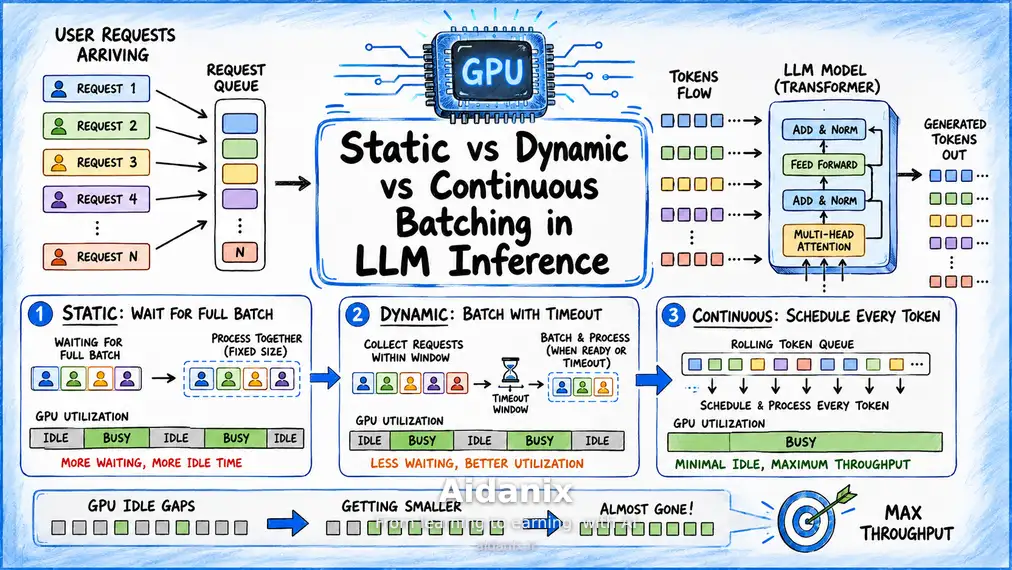
Optimizing the inference process in Large Language Models (LLMs) is one of the key challenges for developers in production environments. One of the primary solutions for increasing efficiency and reducing costs is the use of batching techniques, which are categorized into three main types: static, dynamic, and continuous.
In static batching, requests wait until a fixed threshold is reached, leading to increased latency. In contrast, the continuous batching technique has revolutionized throughput by allowing new requests to enter as soon as the processing of any single token is completed. Understanding the differences between these three approaches is essential for the optimal management of hardware resources and improving user experience in AI-driven applications.