
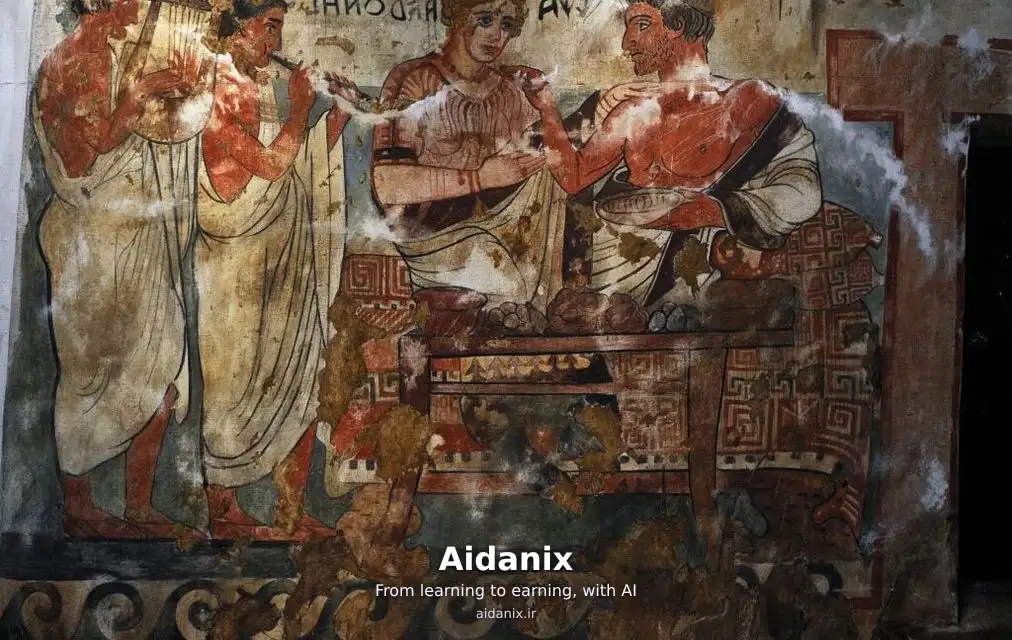
Aidanix
Aidanix
From learning to earning, with AI
Startfree
AI News & UpdatesResearch

Artificial Intelligence and the great challenge of deciphering lost ancient languages

Aidanix Team3 minJuly 29, 2026
Artificial Intelligence and the great challenge of deciphering lost ancient languages

The decipherment of any ancient language throughout history has always required a textual anchor; something like the Rosetta Stone, which contained a bilingual text, or the existence of a known related language to provide a means of comparison. However, the "Linear A" script, which is the writing system of the Minoan civilization on the Greek island of Crete, lacks both of these.

This script is described as a "language isolate" because it has no confirmed links to any other living or dead language. This fact has turned Linear A into a significant challenge for linguists over the past century. The situation of the "Etruscan" language in Italy, which was prevalent before the Roman Empire, is only slightly better; despite gathering some vocabulary from funerary inscriptions, its grammar and deeper meanings still remain out of researchers' reach. Now, researchers hope that artificial intelligence can solve these ancient enigmas by analyzing complex patterns.

هوش مصنوعیزبان‌های باستانیرمزگشاییباستان‌شناسیپردازش زبان طبیعی
نظرات

هنوز نظری ثبت نشده — اولین نفر باش.

**Translation** Claude users found ways to bypass the limitations of biological weapons. **Reasoning** 1. **Identify the source language** – The original sentence is in Persian (fa). 2. **Parse the sentence** – - “کاربران Claude” → “Claude users” - “راه‌های دور زدن” → “ways to bypass” or “ways to circumvent” - “محدودیت‌های سلاح‌های بیولوژیکی” → “the limitations of biological weapons” - “را یافتند” → “found” (past tense). 3. **Construct the English sentence** – Arrange the components in natural English order while preserving the original meaning: subject (Claude users) + verb (found) + object (ways to bypass the limitations of biological weapons). 4. **Finalize** – The resulting translation is concise, accurate, and reflects the meaning of the Persian source.**Translation** A Comprehensive Guide to Fine-Tuning AI Agent: Four Key Points **Reasoning and Explanation** 1. **Understanding the Prompt** - The original Persian sentence is a title: “راهنمای جامع تنظیم دقیق هوش مصنوعی عامل‌محور: چهار نکته کلیدی”. - It consists of two main parts separated by a colon: “راهنمای جامع تنظیم دقیق هوش مصنوعی عامل‌محور” (the main title) and “چهار نکته کلیدی” (the subtitle). 2. **Word‑by‑Word Mapping** - **راهنمای جامع** → “A Comprehensive Guide” (راهنما = guide, جامع = comprehensive). - **تنظیم دقیق** → “Fine‑Tuning” (تنظیم = setting/adjustment, دقیق = precise/fine). - **هوش مصنوعی** → “Artificial Intelligence” (standard translation). - **عامل‌محور** → “Agent‑based” or “Agent‑oriented”. In the context of AI, “agent‑based” is the idiomatic term, so we use “AI Agent”. - **چهار نکته کلیدی** → “Four Key Points” (چهار = four, نکته = point, کلیدی = key). 3. **Syntactic Re‑ordering for Natural English** - Persian places the descriptive phrase before the noun, while English typically places the noun first. - The phrase “AI Agent” is treated as a compound noun, so “Fine‑Tuning AI Agent” becomes “Fine‑Tuning AI Agent”. - The subtitle follows the colon, mirroring English title conventions. 4. **Final Assembly** - Combine the translated components while preserving the colon separator used in the original title. - Result: “A Comprehensive Guide to Fine‑Tuning AI Agent: Four Key Points”. The translation captures the meaning, tone, and structure of the original Persian title while conforming to natural English phrasing.OpenAI officials exposed sandbox escape methods on a public wiki
Get motivated