
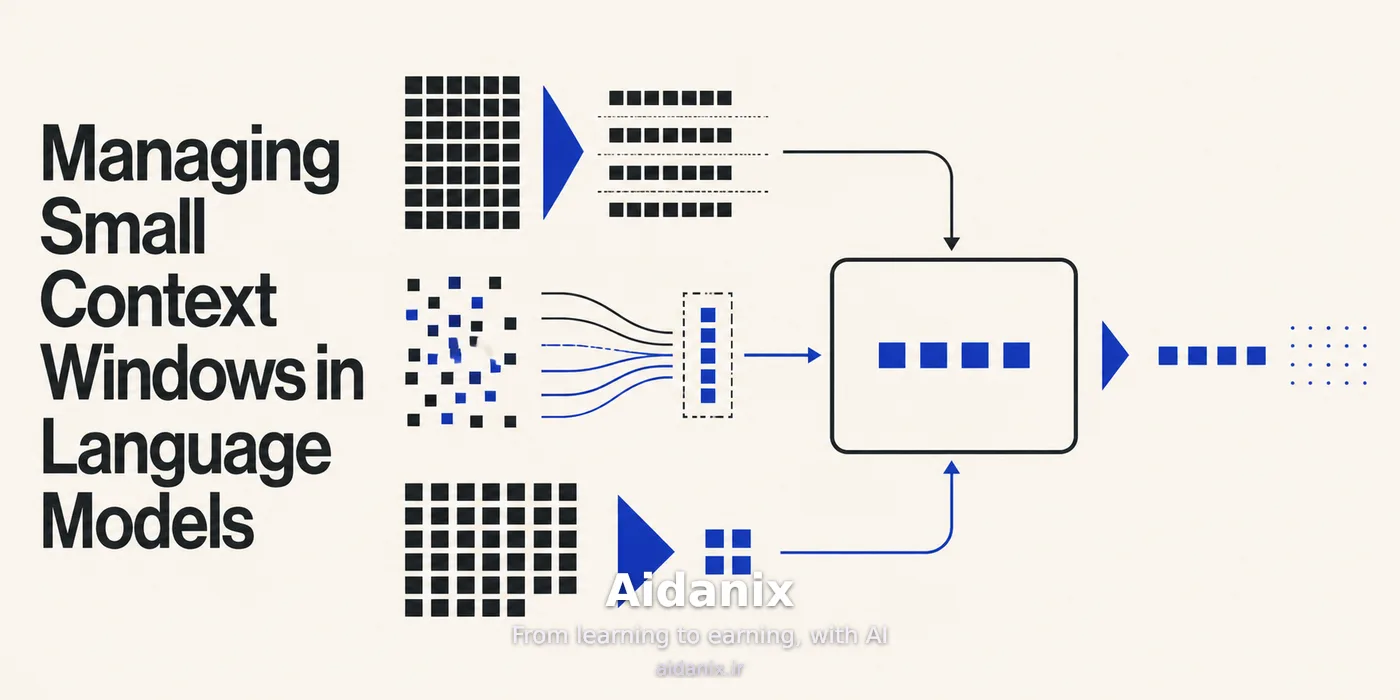
Large language models typically require large context windows to process lengthy texts, but in certain applications, these windows are constrained by hardware limitations or cost considerations. Such constraints can adversely affect the model's accuracy and efficiency.
This article introduces three practical solutions to address this challenge: (1) dividing the text into logical segments and applying intermediate summarization techniques; (2) utilizing external memory to store critical information and retrieve it during processing; (3) employing smart re-sampling methods that feed only the key portions of the text to the model. Complete Python examples are provided for each approach, enabling developers to quickly integrate them into their projects.
By implementing these strategies, the performance of large language models can be significantly enhanced even with small context windows, while also reducing computational costs.