
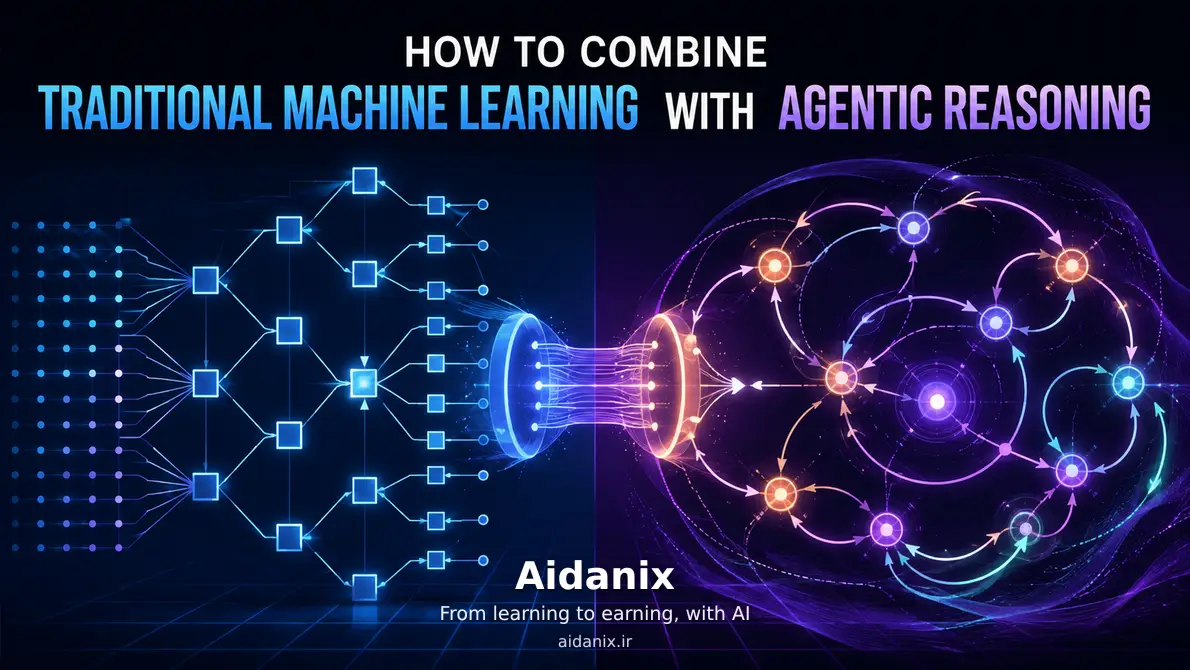
In the world of artificial intelligence, two dominant approaches exist: traditional machine learning, which focuses on data-driven pattern configuration, and agentic reasoning, which enables systems to make autonomous, step-by-step decisions. Each of these methods has inherent limitations; traditional machine learning often performs poorly in understanding contextual context, while agent-based systems can be inefficient in terms of resource consumption and response time.
Recent research shows that combining these two approaches provides a powerful solution for building AI systems that are both fast and accurate. In this hybrid framework, traditional models are responsible for the rapid and initial processing of data, while agent-based modules are activated to solve more complex problems requiring judgment. This technical note reviews the key aspects and necessity of this combination, enabling developers to leverage this approach to optimize the architecture of their intelligent systems.