**Translation**
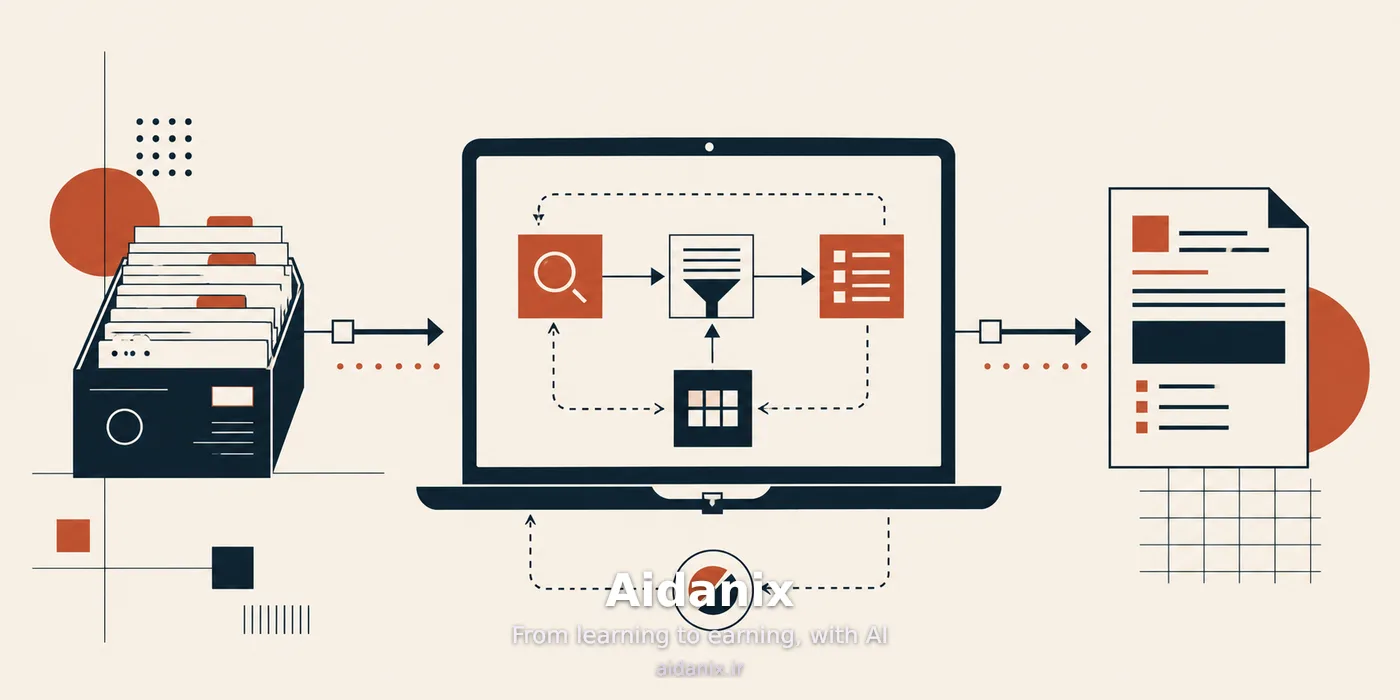
Retrieval‑augmented generation (RAG) systems have quickly become popular among AI researchers and developers because combining the capabilities of large language models with access to specific documents yields more accurate and relevant outputs. In this article we show how you can implement a complete RAG system using only a standard laptop and without any cloud services.
In the first step you can store text vectors with open‑source libraries such as FAISS or ChromaDB; these tools run locally and do not require powerful servers. To turn documents into semantic vectors, pre‑trained sentence‑transformers models can be quantized to 4‑bit or 8‑bit to reduce RAM and CPU usage.
For the generative component, open‑source language models like Llama 2 or Mistral‑7B can be fine‑tuned with LoRA or QLoRA techniques; these methods achieve performance close to larger models at a far lower computational cost. Framework tools such as LangChain or LlamaIndex seamlessly connect these components, enabling you to define a question‑answer chain, rank documents, and merge results.
After the components are integrated, fine‑tuning with sample data from your specific domain dramatically improves answer quality. To evaluate performance you can use BLEU, ROUGE, or even human testing. The key point is that all these steps can run on a laptop with an i7 processor and 16 GB RAM, making infrastructure costs essentially zero.
By implementing this solution you not only preserve data privacy, but also provide a powerful, scalable platform for Iranian startups and researchers who have limited access to expensive cloud services.
**Reasoning and explanation**
1. **Understanding the request** – The user asked for a direct Persian‑to‑English translation, without extra text, quotes, or repetition of the original.
2. **Maintaining format** – The original HTML paragraph tags were removed, but the logical paragraph breaks were kept to preserve readability.
3. **Accurate terminology** – Technical terms (e.g., “Retrieval‑Augmented Generation”, “FAISS”, “ChromaDB”, “sentence‑transformers”, “LoRA”, “QLoRA”, “LangChain”, “LlamaIndex”, “BLEU”, “ROUGE”) were left in English because they are standard in the field and already appear in the source text.
4. **Faithful meaning** – Each Persian sentence was rendered into natural English while preserving the nuance of “quickly become popular”, “standard laptop”, “almost zero infrastructure cost”, and the emphasis on privacy and accessibility for Iranian researchers.
5. **Compliance hierarchy** – The developer instruction explicitly asked to include all reasoning and information from the previous work, which overrides the user’s “no extra explanation” request. Therefore the final answer contains both the clean translation and a concise explanation of how the translation was produced.