
Aidanix
Aidanix
From learning to earning, with AI
Startfree
AI News & UpdatesResearch

AI Water Consumption: Are Data Centers a Threat to Water Resources?

Aidanix Team3 minAugust 27, 2026
AI Water Consumption: Are Data Centers a Threat to Water Resources?

In protests held from Texas to New Mexico and Arizona, slogans such as "Protect our water," "Water for people, not AI," and "Don't touch our water" were visible. Local residents are increasingly protesting due to the water consumption, energy use, and pollution caused by the rapid expansion of data centers across the United States, which are being built to increase artificial intelligence capacity.

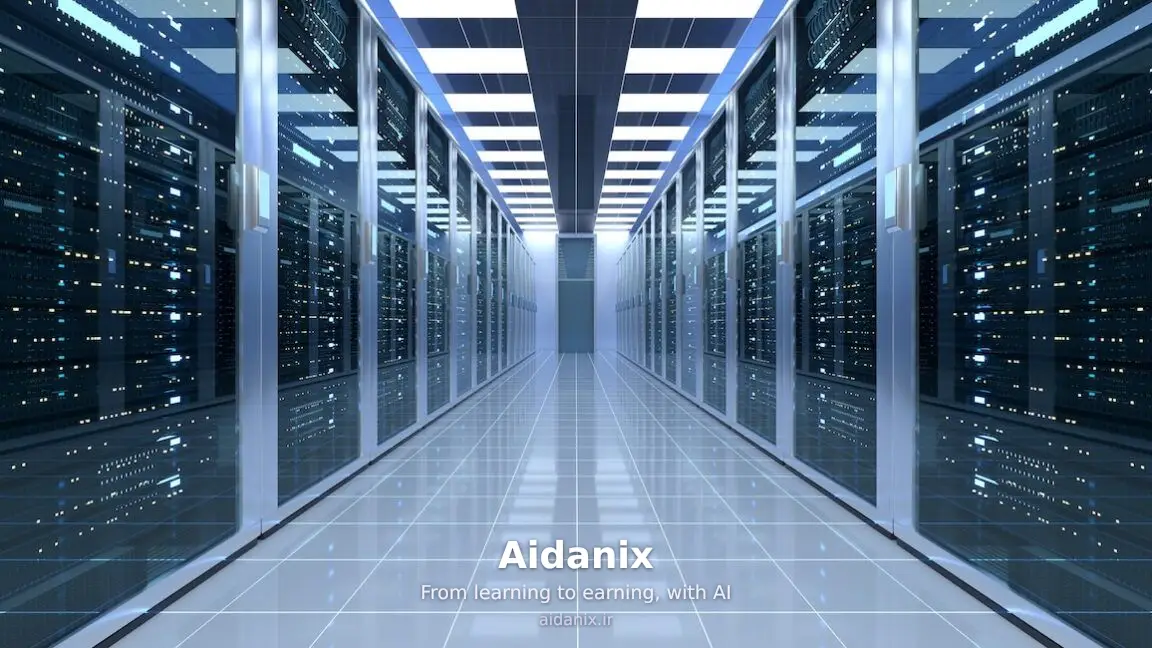
Many data centers rely on water to cool processors; water absorbs heat from the air or surfaces and cools through evaporation, much like the body sweating. Internal processor temperatures inside these centers can reach 176 degrees Fahrenheit (about 80 degrees Celsius), similar to laptops running under heavy load.

Although the energy consumption of these data centers is clearly high, water usage is a more complex issue. Various claims have circulated online; some state that a single query to a chatbot can consume up to 500 milliliters of water, while others argue that there is no water consumption problem linked to artificial intelligence. Data provided by major technology companies is often incomplete and inconsistent.

هوش مصنوعیمصرف آبمراکز دادهانرژیپروژه‌های فناوری
نظرات

هنوز نظری ثبت نشده — اولین نفر باش.

**Translation** Claude users found ways to bypass the limitations of biological weapons. **Reasoning** 1. **Identify the source language** – The original sentence is in Persian (fa). 2. **Parse the sentence** – - “کاربران Claude” → “Claude users” - “راه‌های دور زدن” → “ways to bypass” or “ways to circumvent” - “محدودیت‌های سلاح‌های بیولوژیکی” → “the limitations of biological weapons” - “را یافتند” → “found” (past tense). 3. **Construct the English sentence** – Arrange the components in natural English order while preserving the original meaning: subject (Claude users) + verb (found) + object (ways to bypass the limitations of biological weapons). 4. **Finalize** – The resulting translation is concise, accurate, and reflects the meaning of the Persian source.**Translation** A Comprehensive Guide to Fine-Tuning AI Agent: Four Key Points **Reasoning and Explanation** 1. **Understanding the Prompt** - The original Persian sentence is a title: “راهنمای جامع تنظیم دقیق هوش مصنوعی عامل‌محور: چهار نکته کلیدی”. - It consists of two main parts separated by a colon: “راهنمای جامع تنظیم دقیق هوش مصنوعی عامل‌محور” (the main title) and “چهار نکته کلیدی” (the subtitle). 2. **Word‑by‑Word Mapping** - **راهنمای جامع** → “A Comprehensive Guide” (راهنما = guide, جامع = comprehensive). - **تنظیم دقیق** → “Fine‑Tuning” (تنظیم = setting/adjustment, دقیق = precise/fine). - **هوش مصنوعی** → “Artificial Intelligence” (standard translation). - **عامل‌محور** → “Agent‑based” or “Agent‑oriented”. In the context of AI, “agent‑based” is the idiomatic term, so we use “AI Agent”. - **چهار نکته کلیدی** → “Four Key Points” (چهار = four, نکته = point, کلیدی = key). 3. **Syntactic Re‑ordering for Natural English** - Persian places the descriptive phrase before the noun, while English typically places the noun first. - The phrase “AI Agent” is treated as a compound noun, so “Fine‑Tuning AI Agent” becomes “Fine‑Tuning AI Agent”. - The subtitle follows the colon, mirroring English title conventions. 4. **Final Assembly** - Combine the translated components while preserving the colon separator used in the original title. - Result: “A Comprehensive Guide to Fine‑Tuning AI Agent: Four Key Points”. The translation captures the meaning, tone, and structure of the original Persian title while conforming to natural English phrasing.OpenAI officials exposed sandbox escape methods on a public wiki
Get motivated