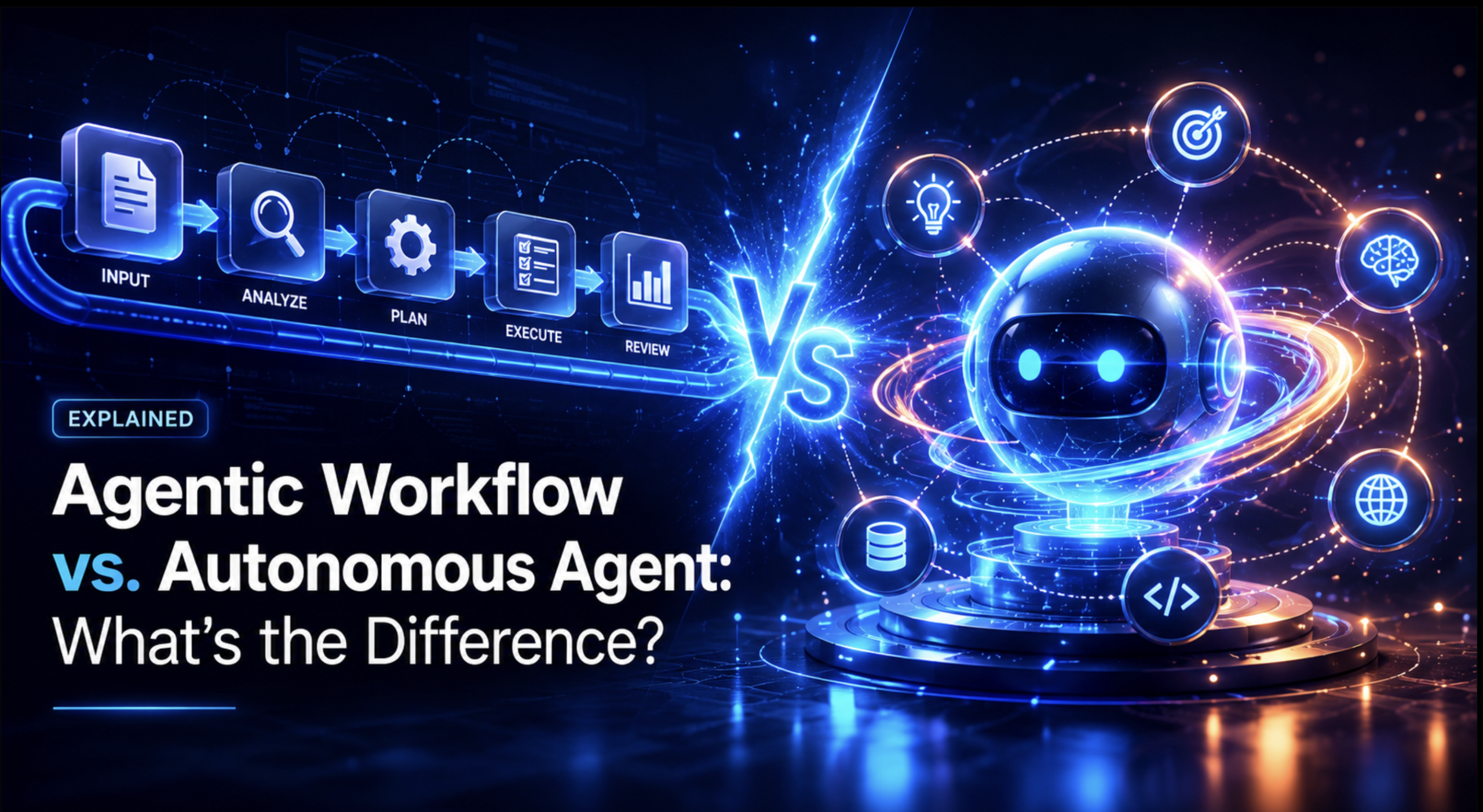
The main difference between Agentic Workflows and Autonomous Agents lies in how control flow is managed and the level of human involvement. In Agentic Workflows, humans still play a central role in overall guidance, defining main objectives, and overseeing work stages. AI agents in this model perform specific, pre-defined tasks within the framework of human instructions; in other words, humans are responsible for writing, defining steps, and overall process management. This approach is more akin to powerful AI tools that serve human objectives.
In contrast, Autonomous Agents are designed, upon receiving an initial objective, to independently plan, identify sub-goals, make decisions, and take the necessary actions to achieve that goal. They have the ability to make decisions and adapt to new conditions, and the control flow largely resides within the AI system itself. While Agentic Workflows emphasize increasing human productivity through the automation of specific tasks, Autonomous Agents aim to perform more complex tasks with minimal need for human supervision, and have the potential for deeper transformation in how we interact with AI.