Agentlik sun'iy intellekt,
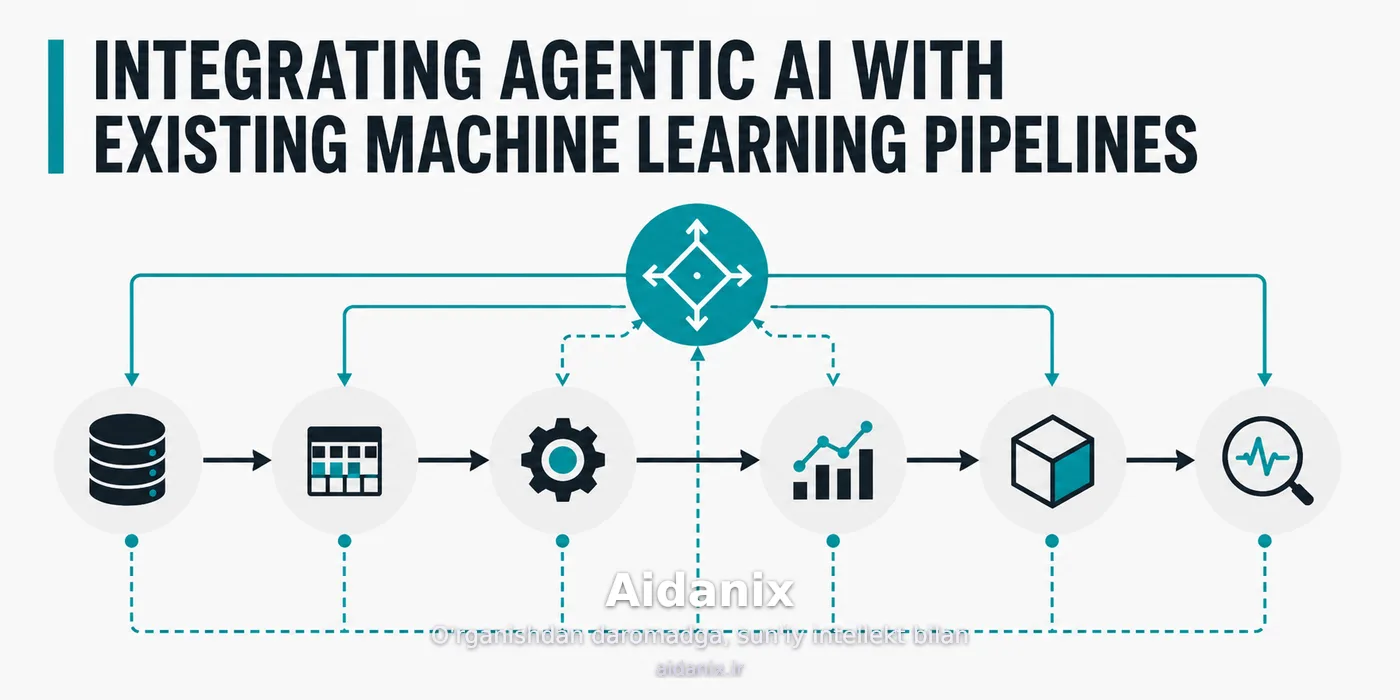
**Translation** Agensli AI ning Mashinli Oʻrganish Quvurlarini Avtomatlashtirilgan Mijozlarga Yoʻnaltirilgan Tizimlarni Qurish Bilan Birlashtirish **Explanation and Reasoning** - **“Integration of …”** was rendered as **“… Birlashtirish”**, which is the standard Uzbek verb for “to integrate” or “to combine”. - **“Agentic AI”** does not have a direct Uzbek equivalent, so the term was transliterated as **“Agensli AI”** (using “agensli” to convey “agentic” – i.e., having agency) while keeping the widely recognized abbreviation “AI”. - **“Machine Learning Pipelines”** was translated to **“Mashinli Oʻrganish Quvurlari”**. “Mashinli o‘rganish” is the established term for “machine learning”, and “quvurlar” (literally “pipes” or “conduits”) is commonly used in Uzbek technical literature to denote “pipelines”. - **“to Build Automated Customer‑Centric Systems”** was expressed as **“Avtomatlashtirilgan Mijozlarga Yoʻnaltirilgan Tizimlarni Qurish Bilan”**. - “Automated” → **“Avtomatlashtirilgan”**. - “Customer‑Centric” → **“Mijozlarga Yoʻnaltirilgan”** (literally “directed toward customers”). - “Systems” → **“Tizimlar”**, with the plural accusative case **“Tizimlarni”** to match the verb “Qurish” (“to build”). - The phrase “Bilan” (“with”) connects the integration clause to the purpose clause, preserving the original sentence structure. The final Uzbek sentence maintains the original meaning, technical terminology, and grammatical flow appropriate for a formal, technical context.
Aidanix jamoasi3 daq26-avgust, 2026
هوش مصنوعی عاملگراخطوط لوله یادگیری ماشینادغام هوش مصنوعیسیستمهای خودکارمشتریمحور