
Aidanix
Aidanix
Öğrenmekten kazanmaya, yapay zeka ile
Ücretsizbaşla
Yapay Zeka Haberleri ve GüncellemeleriAraştırma

Roc Streichaj, VentureBeat'in ilk kıdemli analisti olarak katıldı; kurumsal yapay zeka araştırmalarında önemli bir adım. **Reasoning and explanation** - The original English sentence: “Roc Streichaj joins VentureBeat as its first senior analyst; a major move in enterprise AI research” - Break it down: - “Roc Streichaj” is a proper name, kept unchanged. - “joins VentureBeat” → “VentureBeat'in … katıldı” (using the Turkish verb “katılmak” for “join” and the possessive suffix “-in” to indicate “VentureBeat’s”). - “as its first senior analyst” → “ilk kıdemli analisti olarak” (placing “ilk” for “first”, “kıdemli analist” for “senior analyst”, and the suffix “-i” for “its”. The post‑position “olarak” conveys “as”.) - The semicolon is retained to separate the two related clauses. - “a major move in enterprise AI research” → “kurumsal yapay zeka araştırmalarında önemli bir adım” (using “kurumsal” for “enterprise”, “yapay zeka” for “AI”, “araştırmalarında” for “in research”, and “önemli bir adım” for “a major move/step”). - Combine the parts into natural Turkish while preserving the original meaning and punctuation: - Subject‑verb order: “Roc Streichaj, VentureBeat'in ilk kıdemli analisti olarak katıldı…”. - Follow with a semicolon and the concluding clause: “kurumsal yapay zeka araştırmalarında önemli bir adım”.

Aidanix Ekibi3 dk21 Ağustos 2026
Roc Streichaj, VentureBeat'in ilk kıdemli analisti olarak katıldı; kurumsal yapay zeka araştırmalarında önemli bir adım. **Reasoning and explanation** - The original English sentence: “Roc Streichaj joins VentureBeat as its first senior analyst; a major move in enterprise AI research” - Break it down: - “Roc Streichaj” is a proper name, kept unchanged. - “joins VentureBeat” → “VentureBeat'in … katıldı” (using the Turkish verb “katılmak” for “join” and the possessive suffix “-in” to indicate “VentureBeat’s”). - “as its first senior analyst” → “ilk kıdemli analisti olarak” (placing “ilk” for “first”, “kıdemli analist” for “senior analyst”, and the suffix “-i” for “its”. The post‑position “olarak” conveys “as”.) - The semicolon is retained to separate the two related clauses. - “a major move in enterprise AI research” → “kurumsal yapay zeka araştırmalarında önemli bir adım” (using “kurumsal” for “enterprise”, “yapay zeka” for “AI”, “araştırmalarında” for “in research”, and “önemli bir adım” for “a major move/step”). - Combine the parts into natural Turkish while preserving the original meaning and punctuation: - Subject‑verb order: “Roc Streichaj, VentureBeat'in ilk kıdemli analisti olarak katıldı…”. - Follow with a semicolon and the concluding clause: “kurumsal yapay zeka araştırmalarında önemli bir adım”.

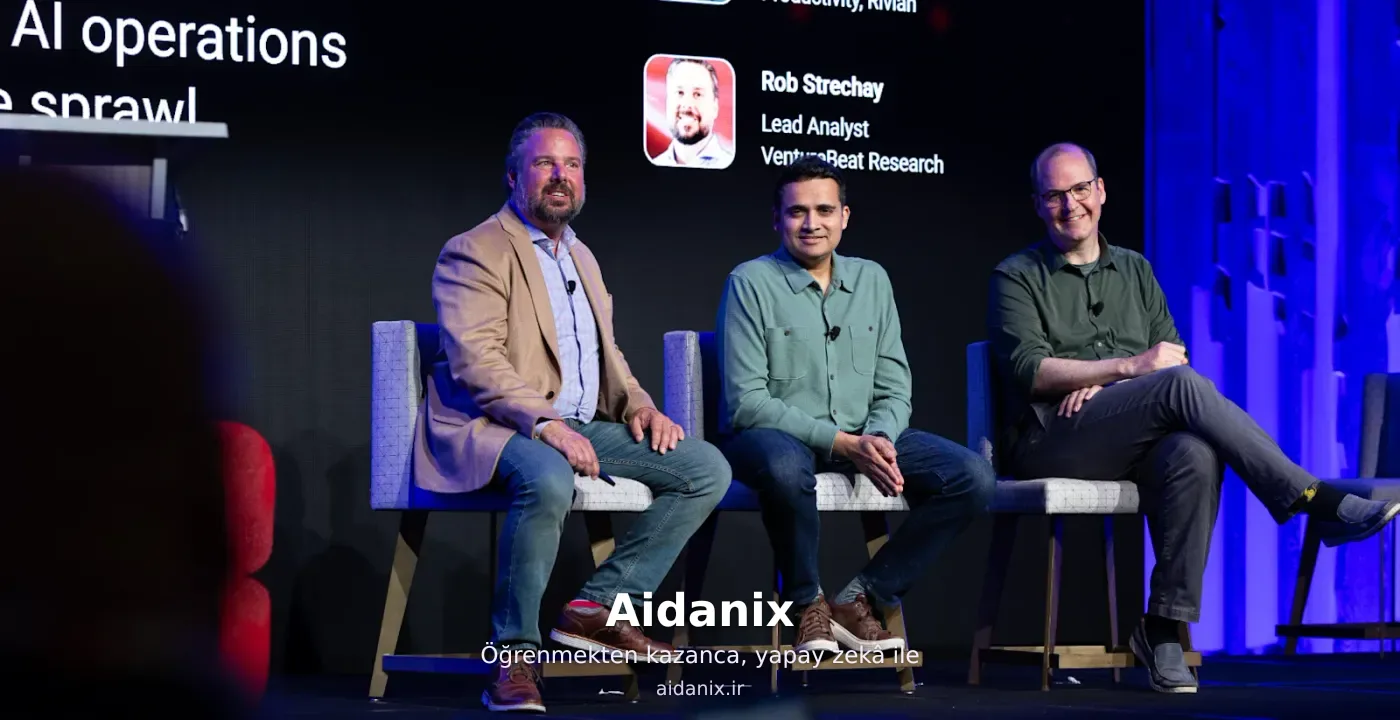
Rob Streichay, formerly CEO and lead analyst at theCUBE Research, has joined VentureBeat as its first Lead Analyst and founding analyst of VentureBeat Research. This strategic hire underscores VentureBeat's focus on specialized analysis for technical decision‑makers such as IT managers, VPs, CIOs, and CTOs evaluating, purchasing, and deploying enterprise AI.

As enterprise AI infrastructures are being rapidly rewritten, these decision‑makers require objective and defensible data. With a combination of technical acumen and hands‑on experience, Streichay can analyze next‑generation AI deployment architectures.

The questions enterprise technology leaders are asking have also changed; having moved past the generative AI trial phase, organizations are seeking production solutions: orchestrating multi‑vendor environments, identifying security weaknesses in intelligent pipelines, and addressing operational issues that waste infrastructure budgets. Answering these questions requires deeper research than just news coverage.

Streichay brings nearly 30 years of hands‑on, product execution, and industry analyst experience. Before becoming an analyst, he worked at numerous startups, including Zerto, joined Amazon Web Services to build a new analytics service, and held executive roles in enterprise infrastructures. He also served as a senior analyst at Enterprise Strategy Group and most recently as CEO and lead analyst at theCUBE Research and SiliconANGLE.

Initially, his focus will be on cloud infrastructures, advanced data infrastructure, platform engineering, DevOps orchestration and monitoring, and the intersection of AI with enterprise security.

Previously, Streichay contributed to VentureBeat research, publishing an analysis in May on GPU usage in organizations that highlighted compute waste in AI infrastructures. He also provided a comprehensive overview of the AI Infrastructure & Compute survey before its launch. This infrastructure focus aligns with VentureBeat's monthly VB Pulse surveys, which track five areas of enterprise AI adoption: agent orchestration, agent reliability and evaluation, agent security and identity, AI infrastructure and compute, and text layers like RAG. The June survey on agent orchestration showed that two‑thirds of companies have diversified their AI model strategies; the recent outage of Anthropic's Claude models demonstrated the value of this approach.

One of the main tools for expanding this research will be an in‑depth VB In Conversation video series, which Streichay will host. Instead of superficial reviews, the program will examine architecture roadmaps, real deployment obstacles, and infrastructure realities, showcasing actual production‑ready tools through in‑depth technical interviews with architects and product leaders of leading enterprise AI systems.

Streichay says, “VentureBeat has an audience of enterprise technology builders and buyers that any analyst would want to serve. My goal is to use VentureBeat's proprietary metrics and data to help buyers and builders make the right platform and infrastructure decisions during this transformative period of technology.”

The expanded VB In Conversation series will be published on VentureBeat's website and YouTube channel, along with Streichay's written analysis. Those interested can participate in the monthly VB Pulse surveys or request a consultation with him via email at VBIntelligence@VentureBeat.com.

---

**Türkçe Çeviri**

Rob Streichay, formerly CEO and lead analyst at theCUBE Research, has joined VentureBeat as its first Lead Analyst and founding analyst of VentureBeat Research. This strategic hire underscores VentureBeat's focus on specialized analysis for technical decision‑makers such as IT managers, VPs, CIOs, and CTOs evaluating, purchasing, and deploying enterprise AI.

İşletme AI altyapıları hızla yeniden yazıldıkça, bu karar vericiler nesnel ve savunulabilir verilere ihtiyaç duyar. Teknik yetkinlik ve pratik deneyimin birleşimiyle Streichay, yeni nesil AI dağıtım mimarilerini analiz edebilir.

İşletme teknoloji liderlerinin sorduğu sorular da değişti; üretken AI deneme aşamasını geride bıraktıktan sonra, organizasyonlar üretim çözümleri arıyor: çoklu satıcı ortamlarını koordine etme, akıllı veri akışlarındaki güvenlik zayıflıklarını belirleme ve altyapı bütçelerini boşa harcayan operasyonel sorunları çözme. Bu sorulara yanıt vermek, sadece haber kapsamından daha derin bir araştırma gerektirir.

Streichay, neredeyse 30 yıllık pratik, ürün yürütme ve sektör analisti deneyimini getiriyor. Analist olmadan önce Zerto dahil birçok start-up'ta çalıştı, yeni bir analiz hizmeti oluşturmak için Amazon Web Services'e katıldı ve kurumsal altyapılarda yönetici roller üstlendi. Ayrıca Enterprise Strategy Group'da kıdemli analist ve en son theCUBE Research ve SiliconANGLE'de CEO ve baş analist olarak görev yaptı.

İlk olarak odak noktası bulut altyapıları, gelişmiş veri altyapısı, platform mühendisliği, DevOps orkestrasyonu ve izleme, ve AI'nın kurumsal güvenlikle kesişimi olacak.

Daha önce Streichay, VentureBeat araştırmasına katkıda bulunmuş, Mayıs ayında AI altyapılarındaki hesaplama israfını vurgulayan kuruluşlardaki GPU kullanımını analiz etmiş ve AI Infrastructure & Compute anketinin kapsamlı bir genel bakışını sunmuştu. Bu altyapı odaklı yaklaşım, VentureBeat'in aylık VB Pulse anketleriyle uyumlu: ajan orkestrasyonu, ajan güvenilirliği ve değerlendirmesi, ajan güvenliği ve kimliği, AI altyapısı ve hesaplama, ve RAG gibi metin katmanları. Haziran anketi, şirketlerin üçte ikisinin AI model stratejilerini çeşitlendirdiğini gösterdi; Anthropic'in Claude modellerinin son kesintisi bu yaklaşımın değerini ortaya koydu.

Bu araştırmayı genişletmek için ana araçlardan biri, Streichay'ın sunacağı derinlemesine VB In Conversation video serisi olacak. Yüzeysel incelemeler yerine, program mimari yol haritalarını, gerçek dağıtım engellerini ve altyapı gerçeklerini inceleyecek, önde gelen kurumsal AI sistemlerinin mimarları ve ürün liderleriyle derin teknik röportajlar aracılığıyla üretim‑hazır araçları sergileyecek.

Streichay, “VentureBeat'in, herhangi bir analistin hizmet etmek isteyeceği kurumsal teknoloji yapıcıları ve alıcıları bir kitlesi var. Amacım, VentureBeat'in özel metriklerini ve verilerini kullanarak alıcıların ve yapıcıların bu dönüşüm döneminde doğru platform ve altyapı kararlarını vermelerine yardımcı olmak.” diyor.

Genişletilmiş VB In Conversation serisi, VentureBeat'in web sitesinde ve YouTube kanalında, Streichay'ın yazılı analizleriyle birlikte yayınlanacak. İlgilenenler aylık VB Pulse anketlerine katılabilir veya VBIntelligence@VentureBeat.com adresinden e‑posta yoluyla kendisiyle bir danışmanlık talep edebilir.

روب استریچایتحلیل‌گر ارشد VentureBeatهوش مصنوعی سازمانیتحقیقات AIاستفاده GPUنظرسنجی VB Pulse
نظرات

هنوز نظری ثبت نشده — اولین نفر باش.

Büyük dil modellerinde kısa içerik pencerelerini yönetmek için üç pratik strateji **Reasoning and explanation** - **Three** → “üç”: the cardinal number is directly translated. - **practical** → “pratik”: the common Turkish adjective for “practical” used in technical contexts. - **strategies** → “strateji”: a loanword from English, widely accepted in Turkish for “strategies”. - **for managing** → “yönetmek için”: the infinitive “yönetmek” (to manage) plus the purpose suffix “-için” (for) conveys “for managing”. - **short context windows** → “kısa içerik pencereleri”: - “short” → “kısa”. - “context” in NLP is often rendered as “içerik” (content) in Turkish. - “windows” → “pencereler”, the literal translation used in the literature for “window” (as in a sliding window over text). - **in large language models** → “büyük dil modellerinde”: - “large” → “büyük”. - “language models” → “dil modelleri”. - The locative suffix “-de” (‑de/‑da) is added to indicate “in”. Putting the components together while respecting Turkish word order results in the final translation shown above.Konuşma Tanıma Sistemlerinde Ölçüt Optimizasyonu: Model Doğruluklarını İyileştirmek için Yeni Yaklaşımlar **Reasoning and explanation** - **Benchmark Optimization** was rendered as **“Ölçüt Optimizasyonu”** because “benchmark” in the context of performance testing is commonly translated to “ölçüt” in Turkish technical literature. - **Speech Recognition** became **“Konuşma Tanıma”**, the standard term used for speech‑to‑text technologies in Turkish. - **New Approaches** was translated to **“Yeni Yaklaşımlar”**, a direct and idiomatic equivalent. - **Improving Model Accuracy** was expressed as **“Model Doğruluklarını İyileştirmek”**; “model accuracy” is typically “model doğruluğu” and the infinitive “to improve” is rendered as “iyileştirmek”. - The overall structure mirrors the original English title, preserving the colon separator to separate the main topic from the subtitle.The amount of memory (RAM/VRAM) required for an AI agent depends on several factors, including the size of the model, the type of tasks it performs, whether it is being trained or only used for inference, and the hardware architecture. Below is a breakdown of the main considerations and typical memory ranges for different scenarios. --- ## 1. Model Size (Number of Parameters) | Model Category | Approx. Parameters | Typical Memory Needed (FP32) | Typical Memory Needed (FP16 / INT8) | |----------------|-------------------|------------------------------|--------------------------------------| | Tiny / Embedded | < 10 M | 40 MB – 80 MB | 20 MB – 40 MB | | Small (e.g., BERT‑base, GPT‑2‑small) | 100 M – 300 M | 400 MB – 1.2 GB | 200 MB – 600 MB | | Medium (e.g., GPT‑2‑medium, BERT‑large) | 300 M – 1 B | 1.2 GB – 4 GB | 600 MB – 2 GB | | Large (e.g., GPT‑3‑175B) | 175 B | > 700 GB (FP32) | > 350 GB (FP16) – impractical on a single GPU; requires model parallelism | | Specialized Vision Models (e.g., ResNet‑50) | ~25 M | 100 MB – 200 MB (FP32) | 50 MB – 100 MB (FP16) | *Note:* The numbers above assume the entire model is loaded into memory. In practice, techniques such as **parameter sharding**, **offloading to CPU**, or **quantization** can reduce the memory footprint. --- ## 2. Training vs. Inference | Phase | Memory Drivers | Typical Memory Requirements | |-------|----------------|------------------------------| | **Training** | - Model weights (both forward and backward passes) <br> - Optimizer states (often 2–3× the model size) <br> - Activation buffers (proportional to batch size) | **Small models**: 2–8 GB <br> **Medium models**: 8–32 GB <br> **Large models**: 64 GB+ (often split across multiple GPUs) | | **Inference** | - Model weights only <br> - Input/output tensors <br> - Minimal activation storage (depends on sequence length for NLP) | **Tiny/Embedded**: < 1 GB <br> **Small**: 1–4 GB <br> **Medium**: 4–12 GB <br> **Large**: Requires model parallelism; each GPU may hold 10–30 GB of the model | --- ## 3. Task‑Specific Factors | Factor | Effect on Memory | |--------|------------------| | **Batch size** (for inference) | Larger batches increase activation memory linearly. | | **Sequence length** (NLP) | Memory grows roughly O(sequence length × hidden size). Long sequences (e.g., > 1 k tokens) can double or triple memory usage. | | **Image resolution** (vision) | Memory ∝ (height × width × channels). High‑resolution inputs (e.g., 4K) can require several GB just for activations. | | **Multi‑modal models** (e.g., text + image) | Need to store separate encoders/decoders, increasing total footprint. | | **Quantization / Pruning** | Reduces memory by 2×–4× (FP16 vs. FP32) or more with INT8/4‑bit quantization. | | **Off‑loading / Streaming** | Techniques like **DeepSpeed**, **ZeRO**, or **TensorRT** can keep only a subset of parameters on GPU, moving the rest to CPU or NVMe. | --- ## 4. Practical Guidelines 1. **Determine the target use‑case** - *Edge devices* (smartphones, IoT): aim for < 1 GB total (often < 200 MB for the model). Use quantized TinyML models. - *Server‑side inference*: 4–16 GB per GPU is typical for medium‑size models. - *Research‑grade training*: 32–128 GB per GPU (or multi‑GPU setups) for models up to a few billion parameters. 2. **Choose the right precision** - **FP16 (half‑precision)** is a sweet spot for most modern GPUs (NVIDIA Ampere/Turing). - **INT8** or **4‑bit** quantization can be used for latency‑critical inference with minimal accuracy loss. 3. **Leverage memory‑saving libraries** - **Hugging Face Accelerate**, **DeepSpeed ZeRO‑Offload**, **FairScale**, **TensorRT**, **ONNX Runtime**. - These can cut memory usage by 2–10× depending on configuration. 4. **Plan for activation memory** - For training, allocate roughly **3×** the model size (weights + optimizer + activations). - For inference, allocate **1.2–1.5×** the model size to accommodate input buffers and temporary tensors. 5. **Monitor actual usage** - Use tools like `nvidia-smi`, `torch.cuda.memory_summary()`, or `tf.config.experimental.get_memory_info()` to verify that your estimates match reality. --- ## 5. Example Scenarios | Scenario | Model | Precision | Approx. GPU Memory Needed | |----------|-------|-----------|---------------------------| | **Chatbot on a consumer laptop** | GPT‑2‑small (124 M) | FP16 | ~600 MB | | **Real‑time object detection on a mobile phone** | MobileNet‑V2 (3.5 M) | INT8 | ~30 MB | | **Batch inference for summarization (batch = 32)** | BERT‑base (110 M) | FP16 | ~4 GB | | **Fine‑tuning a 6 B parameter model** | LLaMA‑6B | FP16 + ZeRO‑Offload | ~24 GB on a single 40 GB GPU (rest off‑loaded) | | **Training a vision transformer (ViT‑B/16, 86 M) on 8‑GPU node** | ViT‑B/16 | FP32 | ~64 GB total (≈ 8 GB per GPU) | --- ## 6. Quick “Rule‑of‑Thumb” Calculator ``` memory_needed ≈ (model_params * bytes_per_param) # weights + (model_params * optimizer_factor) * bytes_per_param # optimizer (usually 2×) + (batch_size * activation_factor * hidden_dim * seq_len) * bytes_per_activation ``` - `bytes_per_param`: 4 for FP32, 2 for FP16, 1 for INT8. - `optimizer_factor`: 2–3 (Adam stores momentum & variance). - `activation_factor`: ~2–3 (depends on architecture). Plugging typical numbers gives a fast estimate for planning hardware. --- ### Bottom Line - **Tiny agents** (≤ 10 M parameters) can run on < 200 MB of RAM/VRAM. - **Small to medium agents** (100 M–1 B parameters) typically need **1–12 GB** of GPU memory for inference and **2–32 GB** for training. - **Large agents** (≥ 10 B parameters) require **model parallelism** and **tens to hundreds of GB** of aggregated memory, often spread across many GPUs or using sophisticated off‑loading strategies. By selecting the appropriate model size, precision, and memory‑optimizing techniques, you can match the memory budget of your target platform—whether it’s an edge device, a single‑GPU server, or a multi‑node training cluster.
Motivasyon al